Buy balkaneana.eu ?
We are moving the project
balkaneana.eu .
Are you interested in purchasing the domain
balkaneana.eu ?
domain@kv-gmbh.de · 0541-91531010
Buy balkaneana.eu ?
How do you calculate resistances?
To calculate resistance in a circuit, you can use Ohm's law, which states that resistance (R) is equal to the voltage (V) across the circuit divided by the current (I) flowing through it. So, the formula for calculating resistance is R = V/I. You can also use the formula R = ρ * (L/A), where ρ is the resistivity of the material, L is the length of the conductor, and A is the cross-sectional area of the conductor. By using these formulas and the given values of voltage, current, resistivity, length, and area, you can calculate the resistance in a circuit. **
Can caffeine resistances be reduced again?
Yes, caffeine resistances can be reduced again by gradually decreasing caffeine intake over time. This can help the body readjust to lower levels of caffeine and become less dependent on it. Additionally, incorporating healthy lifestyle habits such as getting enough sleep, staying hydrated, and managing stress can also help reduce caffeine resistances. It is important to consult with a healthcare professional before making any significant changes to caffeine consumption. **


Similar search terms for Resistances
Top-Angebote
Products related to Resistances:
-
Roommates Almond & Vintage Clara Jean Folklore ForestFolklore whimsy featuring sweet fox kits and other forest critters will create a charm like no other in your space! With neutral tones of beige, taupe, and accents of orange and green this print is as soothing as it is magical. Peel, stick, done!48,39 $*Shipping: 0,00 $Secure redirect to the provider
-
Sagebrook Home Pottery Terracotta Vase Artisan Style Traditional Classic SilhouetteAdd rustic flair instantly - Crafted from durable terracotta pottery, this decorative vase brings timeless charm to any bedroom, living room, or entryway display.64,59 $*Shipping: 0,00 $Secure redirect to the provider
-
RoomMates White & Grey Folklore Trees Peel and Stick WallpaperFilled with cozy, hygge style, Grey Folklore Trees Peel and Stick Wallpaper is sure to catch the eye of everyone who enters your home. This whimsical pattern creates a space for the mind to wander.39,49 $*Shipping: 0,00 $Secure redirect to the provider




-
How do you calculate equivalent resistances?
To calculate equivalent resistances in a series circuit, you simply add up the resistances of each component. In a parallel circuit, you use the formula 1/Req = 1/R1 + 1/R2 + 1/R3 + ..., where Req is the equivalent resistance and R1, R2, R3, etc. are the individual resistances. For more complex circuits, you can use a combination of series and parallel rules to simplify the circuit and find the equivalent resistance. **
-
How do you calculate the total resistances?
To calculate the total resistance in a series circuit, you simply add up all the individual resistances. In a parallel circuit, you use the formula 1/Rtotal = 1/R1 + 1/R2 + 1/R3 + ... where R1, R2, R3, etc. are the individual resistances. Once you have calculated the total resistance, you can use Ohm's Law (V = IR) to determine the current flowing through the circuit. **
-
How high are the resistances in watts?
The resistance in watts depends on the specific circuit or component in question. Resistance is typically measured in ohms, not watts. However, the power dissipated by a resistor, which is measured in watts, can be calculated using the formula P = I^2 * R, where P is power in watts, I is current in amperes, and R is resistance in ohms. So, the resistance itself is not measured in watts, but the power dissipated by the resistance can be calculated in watts. **
-
What are the resistances in different circuits?
In different circuits, resistances can be found in various forms. In a series circuit, the total resistance is the sum of individual resistances. In a parallel circuit, the total resistance is less than the smallest individual resistance. Additionally, resistors can be used to intentionally limit the flow of current in a circuit. Overall, resistances in different circuits serve to control the flow of current and voltage, and can be used to achieve specific electrical characteristics in a circuit. **

What are forces and resistances in physics?
Forces in physics are interactions that cause an object to accelerate, change direction, or deform. They can be classified as contact forces, such as friction and tension, or as field forces, such as gravity and electromagnetic forces. Resistances, on the other hand, are forces that oppose the motion of an object. These can include air resistance, friction, and drag. In physics, understanding forces and resistances is crucial for analyzing the motion and behavior of objects in various situations. **
What resistances do the heating coils have?
The heating coils have electrical resistance, which is the opposition to the flow of electric current. This resistance causes the coils to heat up as the current passes through them, allowing them to generate heat. The resistance of the heating coils can be measured in ohms, and it determines how much heat the coils can produce at a given voltage. **
Top-Angebote
Products related to Resistances:
-
Roommates Clara Jean Folklore ForestInvite beloved folklore whimsy to your space with this scandinavian animal print! Atop a black background, fanciful foxes prance with woodland friends in a mysterious forest! Installing this charming print is as easy as peel, stick, done!49,59 $*Shipping: 0,00 $Secure redirect to the provider
-
Graham & Brown Folklore Tree SageInspired by the Arts and Crafts movement, Folklore Tree is a beautifully painted design, the simplicity of the illustration allows for a playful use of colour. Our colour of the year 2024 Viridis compliments this colourway.200,00 $*Shipping: 0,00 $Secure redirect to the provider
-
Roommates Almond & Vintage Clara Jean Folklore ForestFolklore whimsy featuring sweet fox kits and other forest critters will create a charm like no other in your space! With neutral tones of beige, taupe, and accents of orange and green this print is as soothing as it is magical. Peel, stick, done!48,39 $*Shipping: 0,00 $Secure redirect to the provider
-
Sagebrook Home Pottery Terracotta Vase Artisan Style Traditional Classic SilhouetteAdd rustic flair instantly - Crafted from durable terracotta pottery, this decorative vase brings timeless charm to any bedroom, living room, or entryway display.64,59 $*Shipping: 0,00 $Secure redirect to the provider
-
How do you calculate resistances?
To calculate resistance in a circuit, you can use Ohm's law, which states that resistance (R) is equal to the voltage (V) across the circuit divided by the current (I) flowing through it. So, the formula for calculating resistance is R = V/I. You can also use the formula R = ρ * (L/A), where ρ is the resistivity of the material, L is the length of the conductor, and A is the cross-sectional area of the conductor. By using these formulas and the given values of voltage, current, resistivity, length, and area, you can calculate the resistance in a circuit. **
-
Can caffeine resistances be reduced again?
Yes, caffeine resistances can be reduced again by gradually decreasing caffeine intake over time. This can help the body readjust to lower levels of caffeine and become less dependent on it. Additionally, incorporating healthy lifestyle habits such as getting enough sleep, staying hydrated, and managing stress can also help reduce caffeine resistances. It is important to consult with a healthcare professional before making any significant changes to caffeine consumption. **
-
How do you calculate equivalent resistances?
To calculate equivalent resistances in a series circuit, you simply add up the resistances of each component. In a parallel circuit, you use the formula 1/Req = 1/R1 + 1/R2 + 1/R3 + ..., where Req is the equivalent resistance and R1, R2, R3, etc. are the individual resistances. For more complex circuits, you can use a combination of series and parallel rules to simplify the circuit and find the equivalent resistance. **
-
How do you calculate the total resistances?
To calculate the total resistance in a series circuit, you simply add up all the individual resistances. In a parallel circuit, you use the formula 1/Rtotal = 1/R1 + 1/R2 + 1/R3 + ... where R1, R2, R3, etc. are the individual resistances. Once you have calculated the total resistance, you can use Ohm's Law (V = IR) to determine the current flowing through the circuit. **
Similar search terms for Resistances
-
RoomMates White & Grey Folklore Trees Peel and Stick WallpaperFilled with cozy, hygge style, Grey Folklore Trees Peel and Stick Wallpaper is sure to catch the eye of everyone who enters your home. This whimsical pattern creates a space for the mind to wander.39,49 $*Shipping: 0,00 $Secure redirect to the provider
-
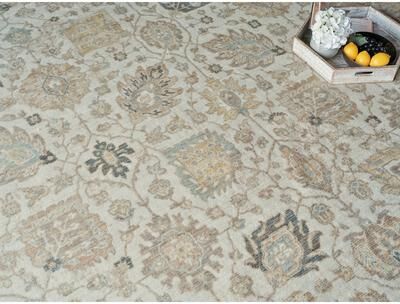
Exquisite Rugs Artisan Handmade Wool/Nylon in Ivory Area RugThis collection seamlessly blends traditional influences with contemporary design elements. Hand-finished with meticulous care, each rug features a low profile and a smooth, plush pile crafted from a premium wool blend.1599,00 $*Shipping: 0,00 $Secure redirect to the provider
-
How high are the resistances in watts?
The resistance in watts depends on the specific circuit or component in question. Resistance is typically measured in ohms, not watts. However, the power dissipated by a resistor, which is measured in watts, can be calculated using the formula P = I^2 * R, where P is power in watts, I is current in amperes, and R is resistance in ohms. So, the resistance itself is not measured in watts, but the power dissipated by the resistance can be calculated in watts. **
-
What are the resistances in different circuits?
In different circuits, resistances can be found in various forms. In a series circuit, the total resistance is the sum of individual resistances. In a parallel circuit, the total resistance is less than the smallest individual resistance. Additionally, resistors can be used to intentionally limit the flow of current in a circuit. Overall, resistances in different circuits serve to control the flow of current and voltage, and can be used to achieve specific electrical characteristics in a circuit. **
-
What are forces and resistances in physics?
Forces in physics are interactions that cause an object to accelerate, change direction, or deform. They can be classified as contact forces, such as friction and tension, or as field forces, such as gravity and electromagnetic forces. Resistances, on the other hand, are forces that oppose the motion of an object. These can include air resistance, friction, and drag. In physics, understanding forces and resistances is crucial for analyzing the motion and behavior of objects in various situations. **
-
What resistances do the heating coils have?
The heating coils have electrical resistance, which is the opposition to the flow of electric current. This resistance causes the coils to heat up as the current passes through them, allowing them to generate heat. The resistance of the heating coils can be measured in ohms, and it determines how much heat the coils can produce at a given voltage. **
* All prices are inclusive of VAT and, if applicable, plus shipping costs. The offer information is based on the details provided by the respective shop and is updated through automated processes. Real-time updates do not occur, so deviations can occur in individual cases. ** Note: Parts of this content were created by AI.